There's no shortage of talk about AI transforming manufacturing. Industry 4.0, smart factories, digital twins, the buzzwords come thick and fast. But for a small-to-mid-sized manufacturer like us, running precision sheet metal operations out of the UAE, most of that conversation feels like it's aimed at companies with seven-figure technology budgets and dedicated digital transformation teams. We have an in-house IT function, but not the scale to roll out enterprise-grade smart factory systems overnight. What we do have is a shop floor running dozens of concurrent jobs across eight production stages, and a team that needed a better way to see what was happening at any given moment.
That's where we started. Not with a grand digital transformation strategy, but with a practical question: can we build something simple that gives everyone visibility into where every job stands, right now?
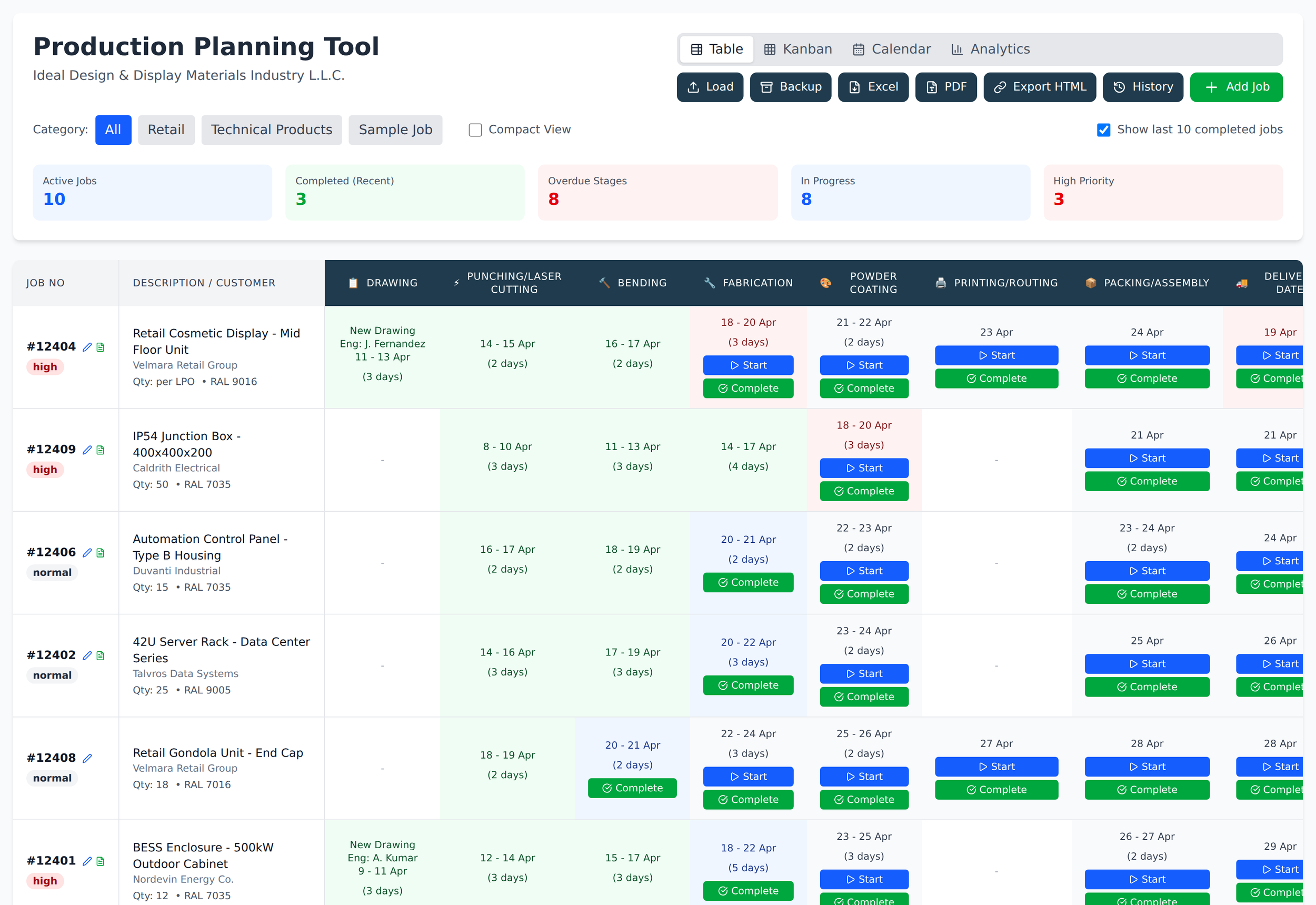
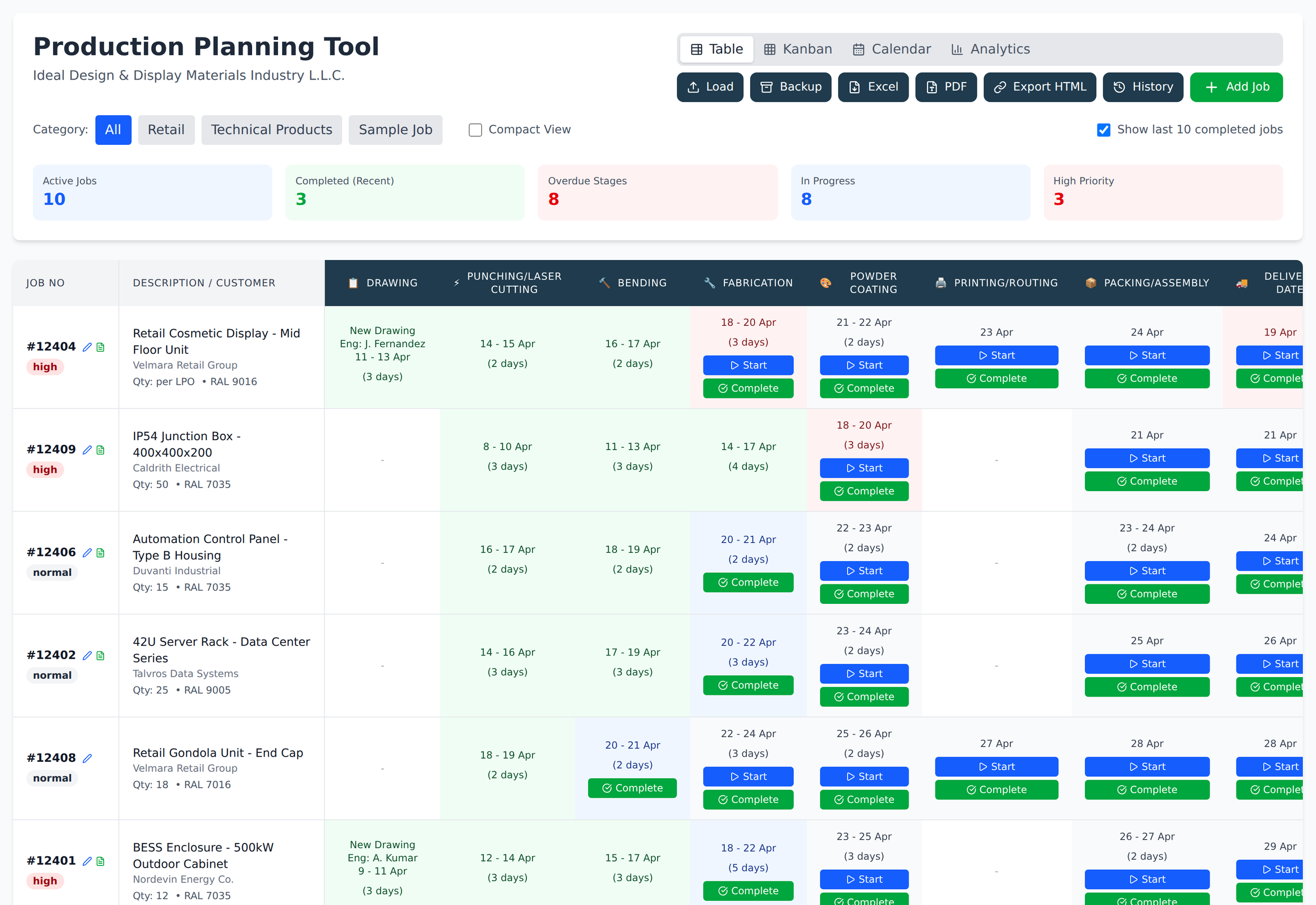
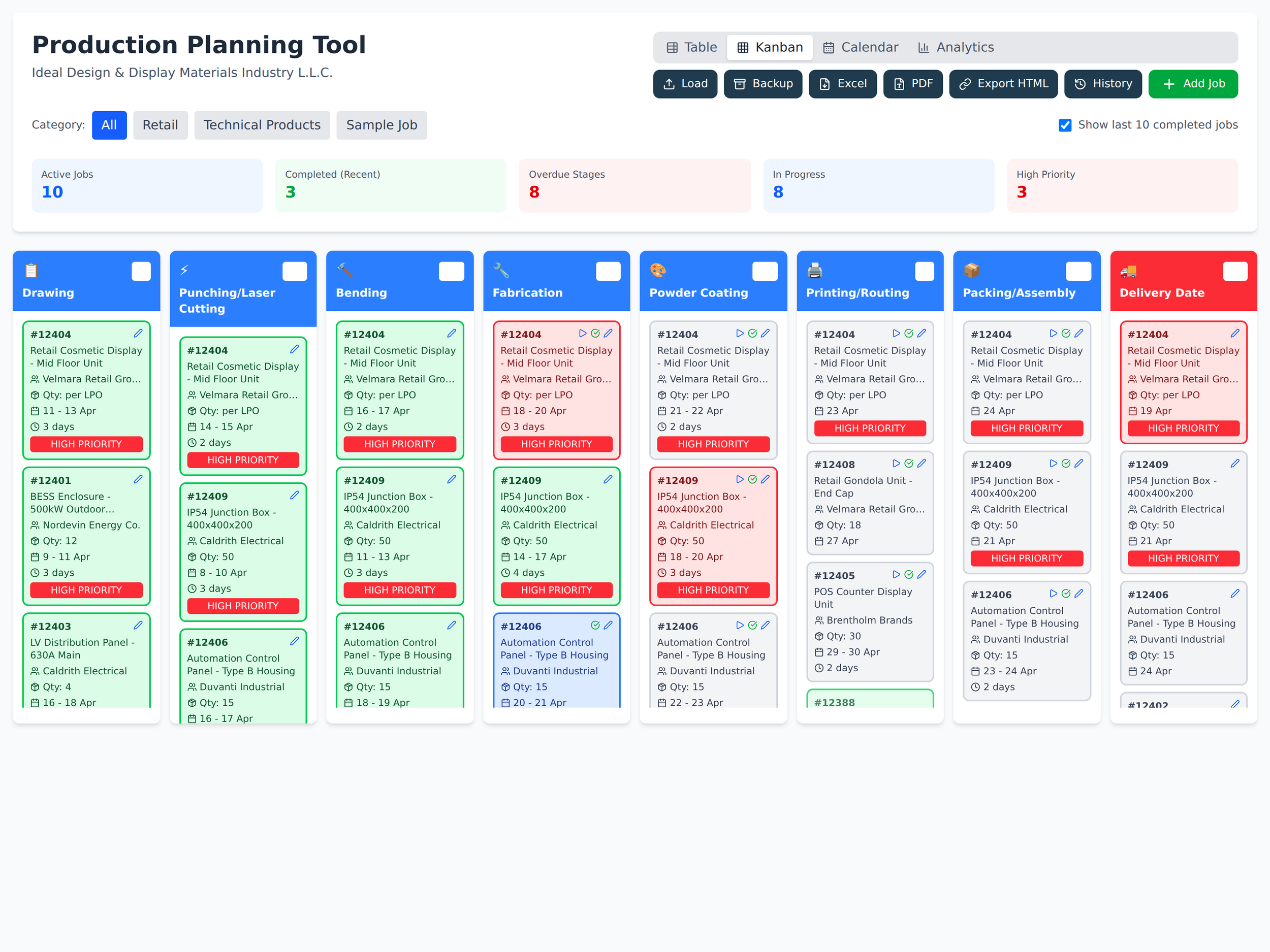
The answer turned out to be a custom production planning dashboard, built with the help of AI tools rather than a traditional software development cycle. The application tracks each manufacturing job from initial drawing through punching and laser cutting, bending, fabrication, powder coating, printing, assembly, and finally delivery. Staff can log new jobs in seconds, assign customers and quantities, set deadlines, and move work through each stage as it progresses. The interface is deliberately straightforward, with a table view for quick scanning, a kanban board for visual workflow tracking, and a calendar view for deadline management. No training manual required.
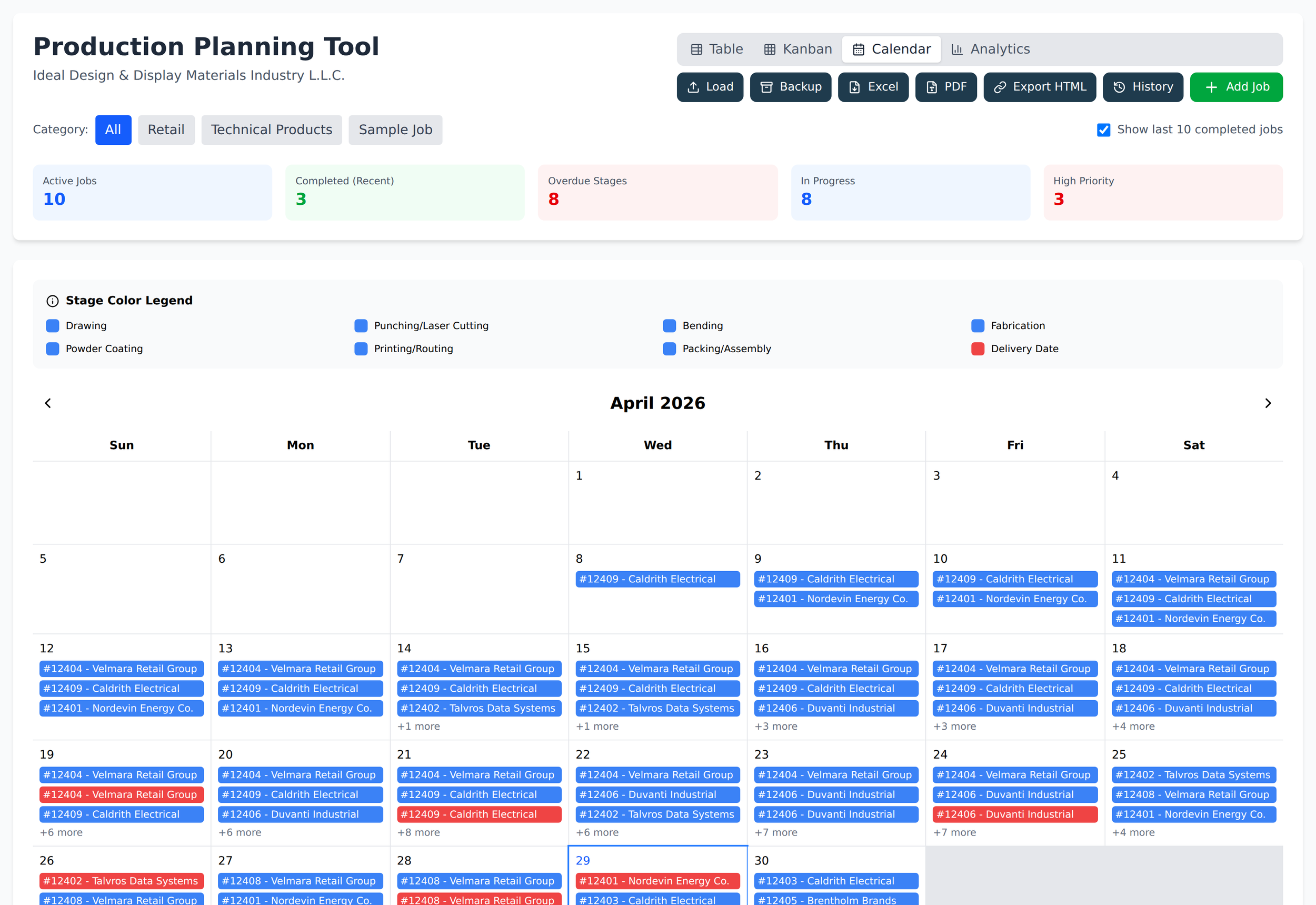
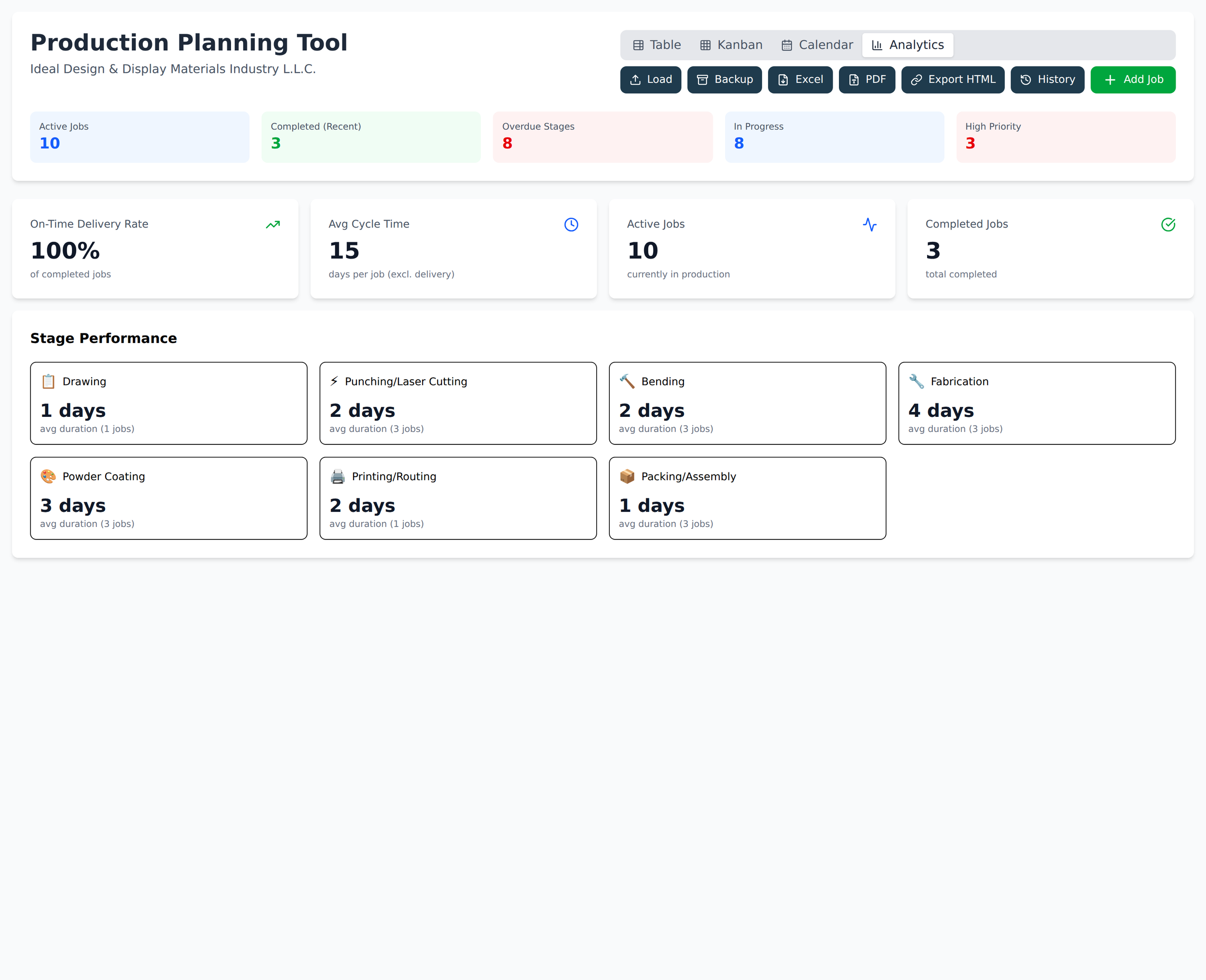
What makes this more than just a digital whiteboard is the analytics layer sitting underneath. Every job logged and every stage transition recorded feeds into a growing dataset. The dashboard calculates on-time delivery rates, average cycle times per job, and active versus completed workloads automatically. It also flags bottlenecks in real time, so if jobs are piling up at powder coating or bending is falling behind, supervisors can act before delays cascade downstream. Over time, as more data accumulates, the stage performance metrics become genuinely useful for capacity planning and spotting recurring constraints.
For us, the real value of using AI in this process wasn't some futuristic automation of the production line itself. It was the speed at which we could go from identifying a workflow problem to having a working tool in our hands. What would have taken months of specification, vendor selection, and implementation through traditional software channels was instead built iteratively, tested on the floor, and refined based on real feedback in a fraction of the time and cost.
The lesson we've taken away is that AI adoption in small-scale manufacturing doesn't need to start with robotics or machine learning on the production line. It can start with something as grounded as giving your shop floor a clear, shared view of the work in front of them, and then letting the data compound into real operational insight over weeks and months.
We're still early in this process and the dashboard continues to evolve as we identify new needs. But the foundation is set: a lightweight, practical system that makes daily production management easier and quietly builds the data infrastructure for smarter decisions down the road. For any small manufacturer wondering where to begin with AI, our advice is simple, start where the friction is.